My Console Shipped 2023

Transforming Platform Console into a Personalized Developer Hub

Overview

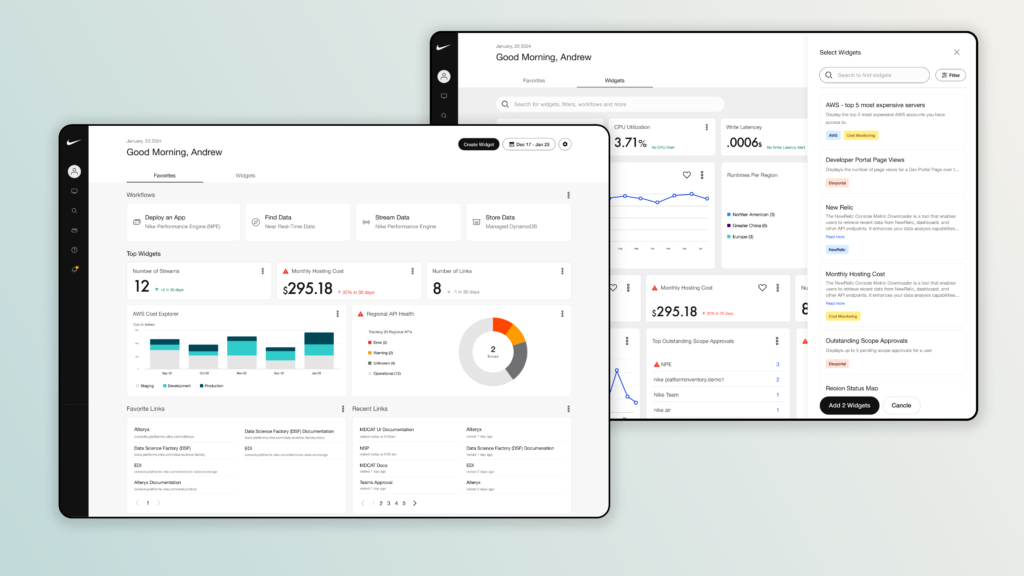
My Console was an additive, personalized layer built on top of Nike’s existing Platform Console. It was designed to increase the core value by improving personalization, consolidating workflows, and improving access to critical information.

Rather than replacing or re-architecting Platform Console, this work introduced a lightweight layer that centralized the most relevant links, tools, updates, and metrics for each developer evolving the platform from a static discovery site into a personalized, operational hub across Nike’s internal technology ecosystem.
Role

Design Lead
Researcher
Visual Designer
Design Thinking Moderator

Timeline

March 2022 - February 2023

Tools

Figma
Fig Jam
Nike Technical Design System

I led product design for Platform Console, driving research synthesis, design vision, and iterative delivery. I partnered closely with product and engineering leadership to navigate constraints, align on scope, and translate a long-term platform vision into a focused, shippable experience.

Signals & Insight

As Platform Console grew to support 85+ technologies and multiple integrated UIs, engagement metrics and customer intakes revealed critical issues:

  • Behavioral data from Pendo and Qualtrics revealed that most users either didn’t take action or visited the platform once and never returned.
  • 85% of users never returned to the platform page after onboarding.

Weekly feedback flagged that engineers frequently missed product updates, maintenance notices, and system status changes. Without a consistent way to assess tool health or value, teams with resources often built their own ad-hoc dashboards. These signals suggested that while Platform Console supported initial discovery, it failed to drive ongoing engagement, operational awareness, and adoption due to its lack of value.

Challenge: Evolve Platform Console into a centralized, return-worthy experience that surfaces critical updates, minimizes manual navigation, and integrates telemetry across 85+ products.

Approach

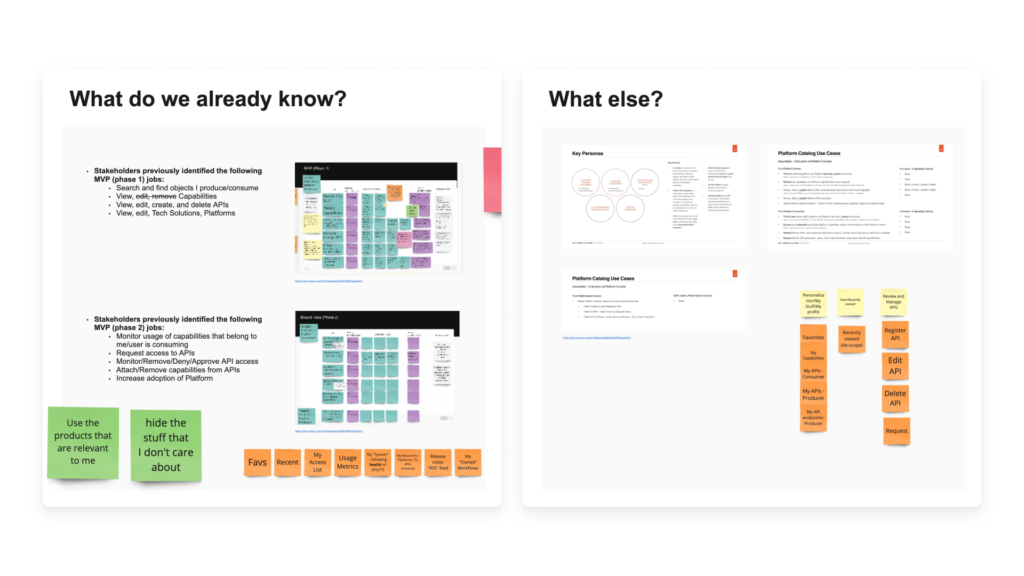
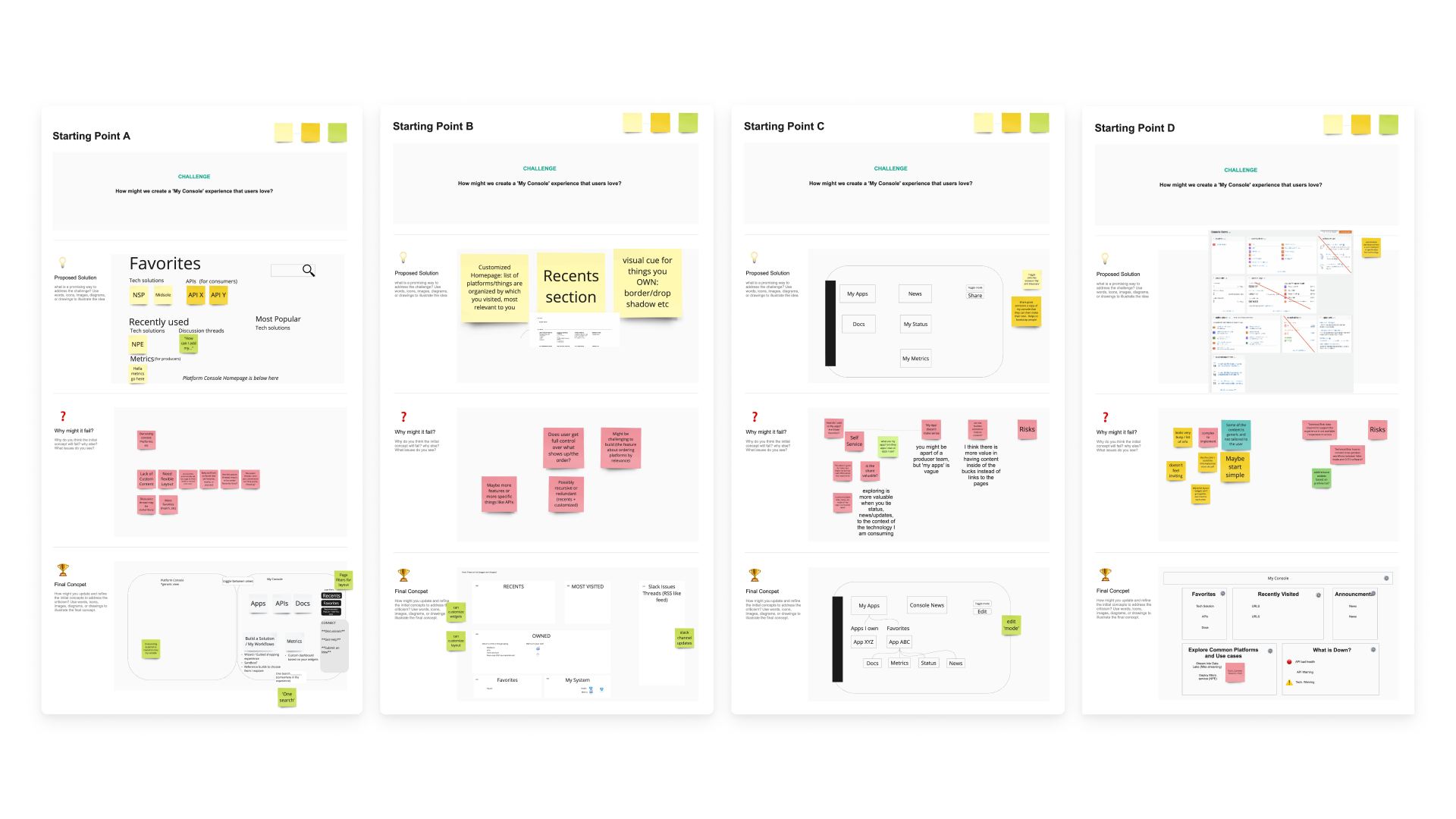
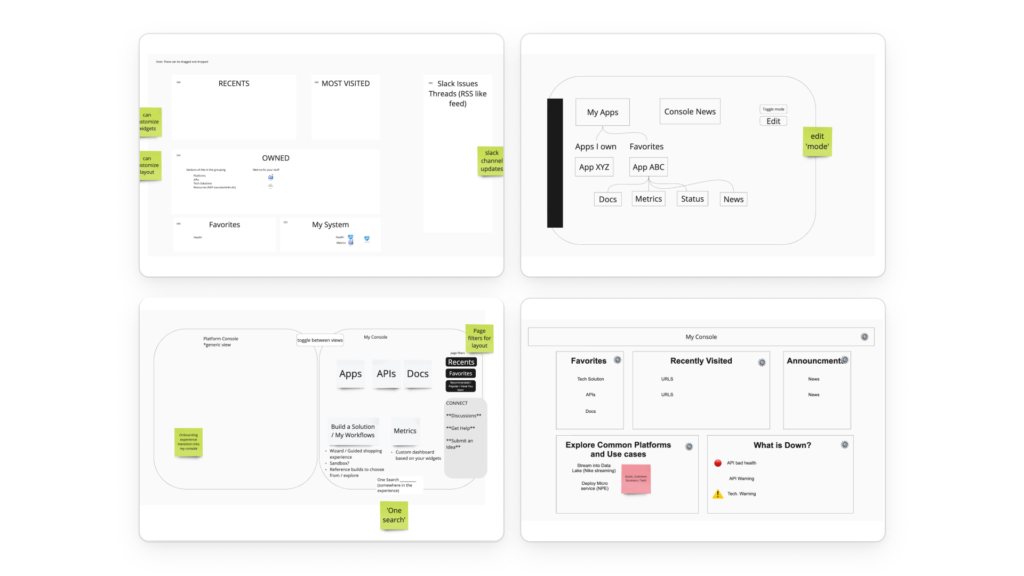
To explore solutions collaboratively and build alignment early, I facilitated 2 design thinking sessions. he first aligned product and engineering stakeholders around core problems, goals, and user needs.The second was a round-robin ideation exercise with stakeholders, engineers, and project managers, where small teams diverged on ideas and then converged through critique and refinement.

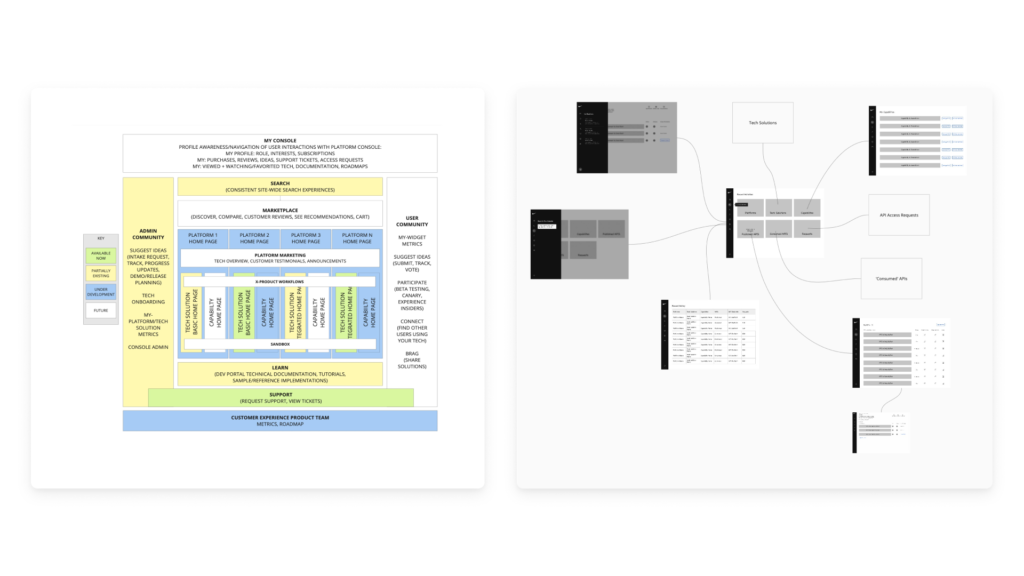
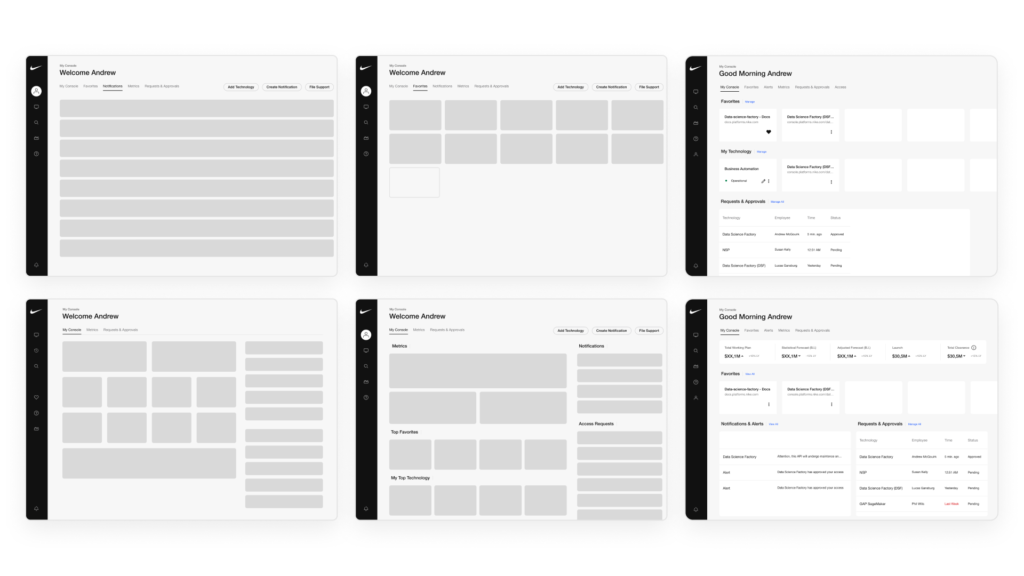
From the highest-voted concepts, I developed lo-fi wireframes within the existing information architecture. The focus was on defining a flexible system that could support personalization, technology adoption, and notifications — while also being scalable and able to evolve with minimal dependency on internal support teams.

Vision & Feedback

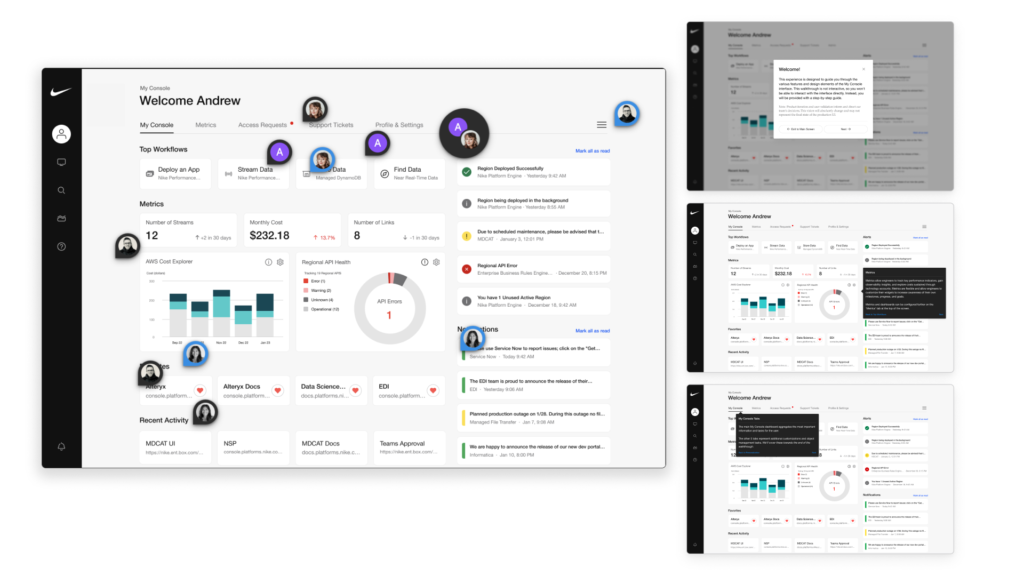
Based on research and stakeholder alignment, I outlined a vision for a unified, customizable developer platform that centralized workflows, metrics, notifications, access requests, and documentation.
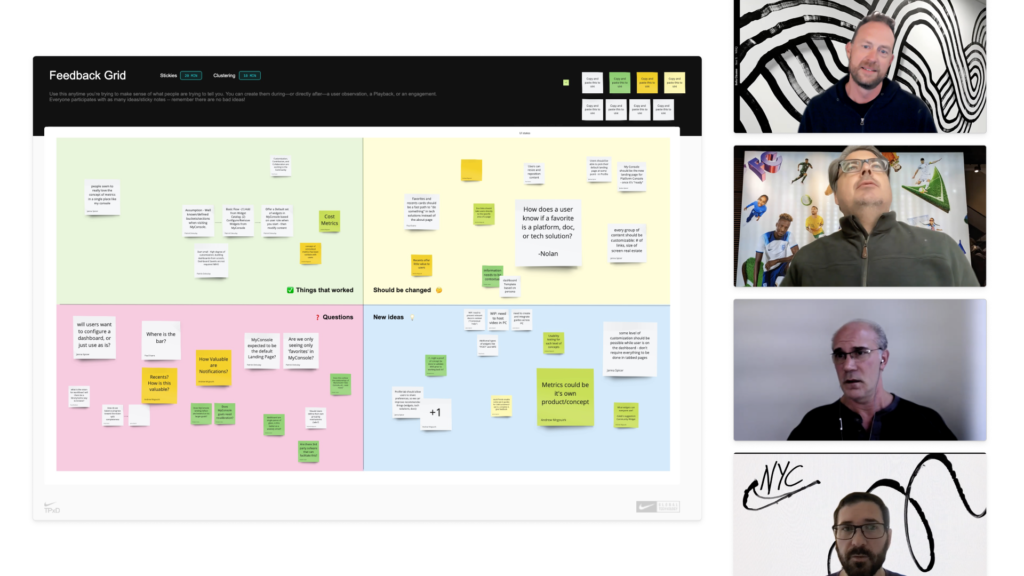
While the broader vision resonated, usability participants consistently prioritized quick access to links and documentation, centralized updates and notifications, and observability insights, allowing the team to deliver value quickly without abandoning strategic intent.

Refining the Scope: Iterations & Wireframes

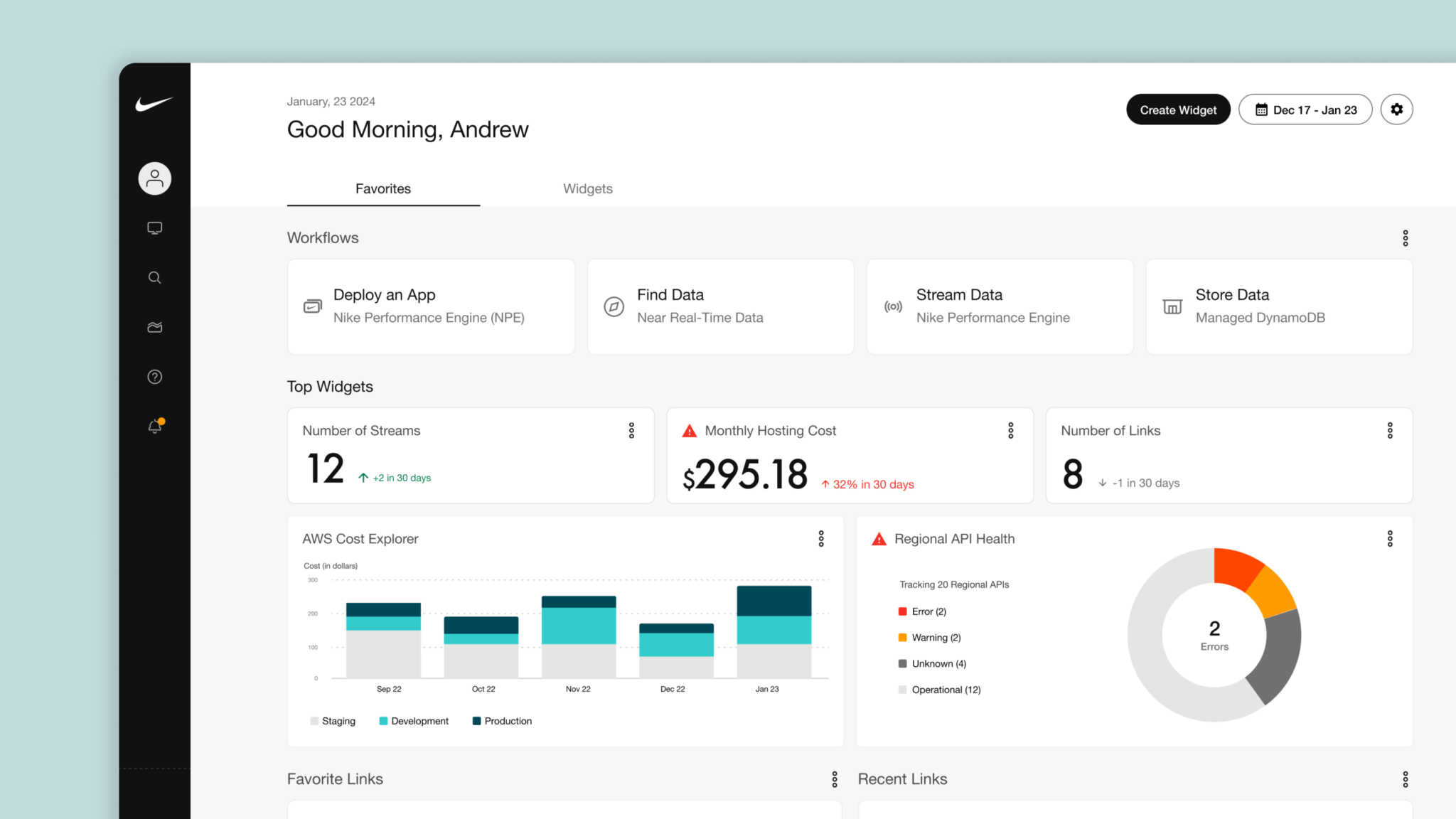
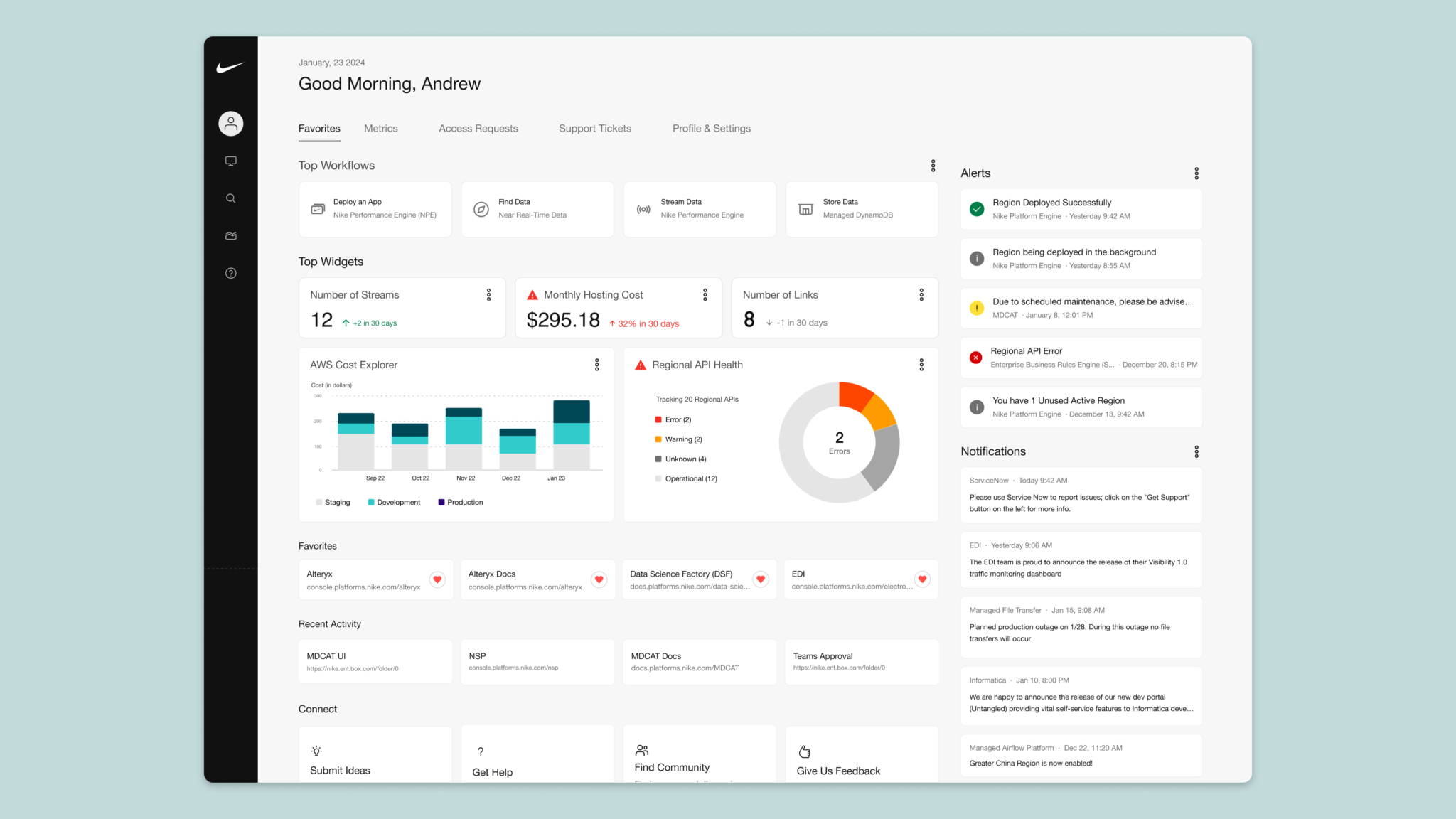
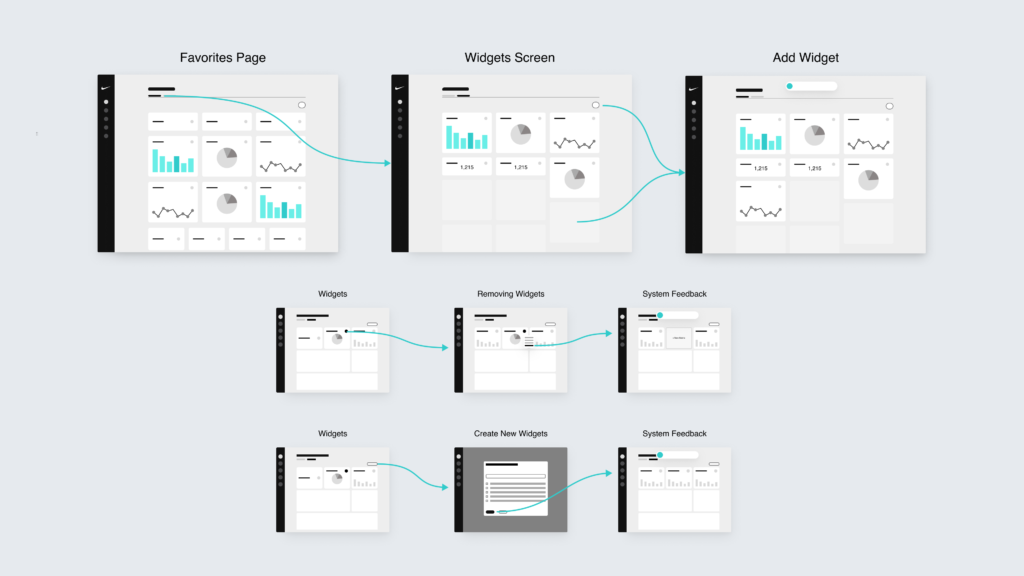
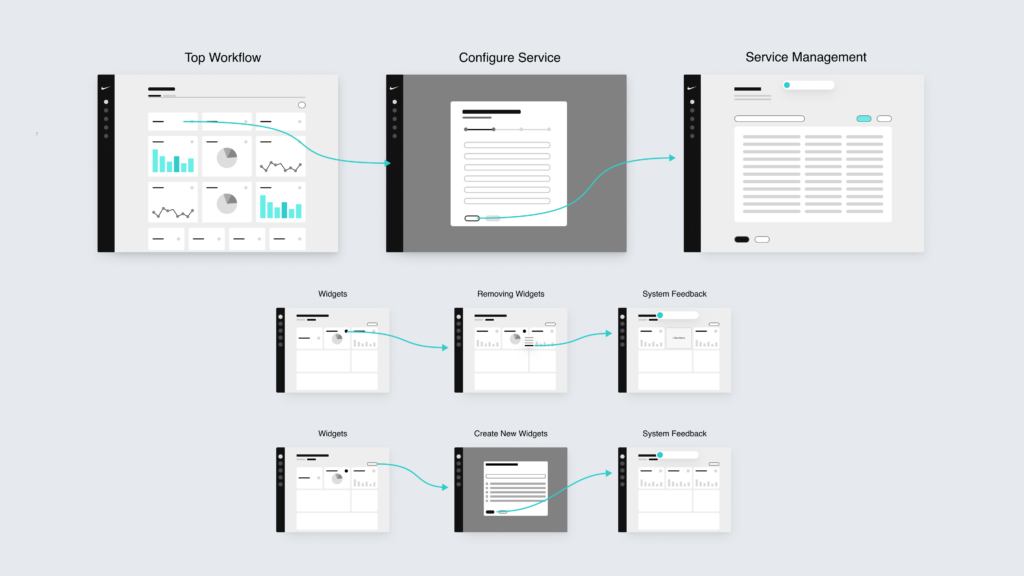
Rather than delivering a broad, multi-surface platform, we centered the experience on a simplified dashboard with two primary tabs: one for favorites and workflow integrations, and a second focused on the widget library.
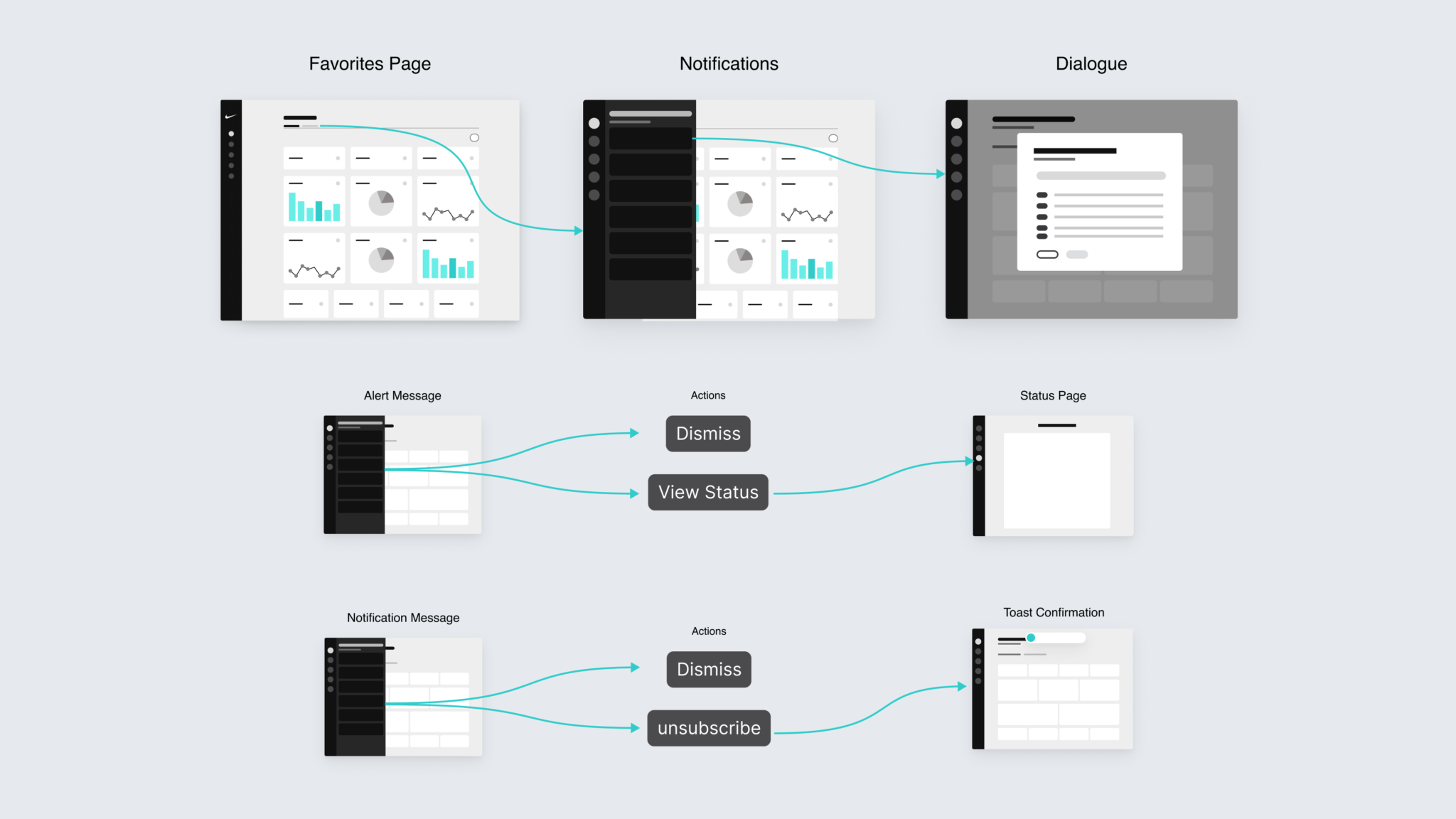
The in-page notifications and alerts were grouped, and added to the main navigation for global access. Users preferred lists for favorites and recents versus the bulky cards from the original designs.
This phase required deliberate trade-offs prioritizing speed to value and reduced functionality over breadth. I iterated on wireframes to refine hierarchy, scannability, and interaction patterns, ensuring the experience was achievable, testable, and immediately useful while remaining extensible over time.

Design Solution

The final design delivered a customizable dashboard that improved discoverability by centralizing workflows, telemetry, notifications, and favorite and recent links in one place. Modular widgets surfaced key metrics and KPIs, while a dedicated workflows tab reduced friction by bringing common actions closer to engineers’ daily tasks. This approach directly addressed earlier findings that developers abandoned the platform once they had discovered and adopted the technology they needed.
133%

increase in repeat individual session visits compared to the previous expereince over 90 days

+6 points

in quarterly CSAT, improving from a below-average 68 to 74

15

integrated library widgets for shared system health metrics and KPIs

Results and Impact

By simplifying the experience into two focused entry points and surfacing critical updates directly on the dashboard, My Console transformed Platform Console from a one-time discovery site into a return-worthy operational hub. This restructure reduced navigation friction, improved visibility into system updates, and created stronger incentives for engineers to engage repeatedly over time.
This work established a scalable foundation for personalization across Nike’s developer ecosystem, centralizing telemetry and observability patterns so teams could adopt shared capabilities without reworking core architecture.

Learnings

  • Validating assumptions sooner would have clarified which problems were worth solving and helped the team focus earlier on the behaviors that increased adoption.
  • This project reinforced that adoption depends less on feature breadth and more on proximity, integration depth, and perceived desireability
  • Creating shared patterns not only improved consistency but reduced the need for teams to build and maintain one-off solutions.